EverStamp
Home › Personal › Schedule of condition
Homeowners next to building work

A schedule of condition nobody can backdate

Before the neighbours start, walk your house with EverStamp and photograph every wall, ceiling and crack. An independent service timestamps the file, so if damage appears later, the photos from before show what was already there.

Carry out inspections or condition surveys? How to set it up for your firm →

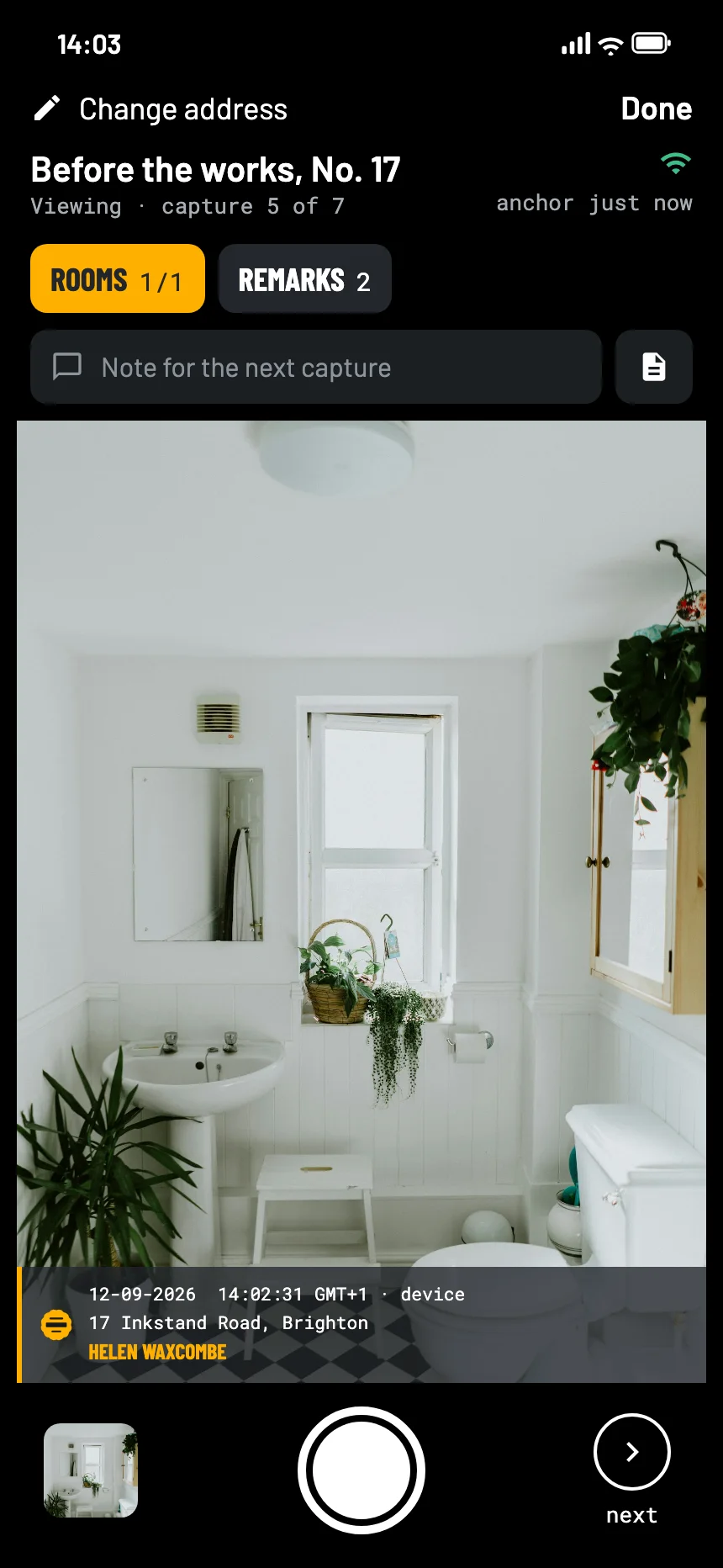
The EverStamp camera at a schedule of condition before building work: the bathroom in the viewfinder, with the stamp bar in the picture
Where it goes wrong

After the works, every crack is an argument

Was it there before?

Old houses have cracks. Once the digging starts, nobody can say which ones are new without a record from before.

The record is someone else’s

If the only photos belong to the other side, you depend on them to share those photos, and on the date they say they took them.

Months go by

Settlement can take months to show. By then nobody remembers how the ceiling looked.

In England and Wales

Where a schedule of condition fits

The Party Wall etc. Act 1996 covers new building on or at the boundary, work to an existing party wall, and excavation near and below a neighbour’s foundations. The Act itself does not require a record of your house before the work. A schedule of condition is that record: a dated account of the state of the neighbouring property, so that damage afterwards can be told apart from what was already there.

Source: gov.uk, Party Wall etc. Act 1996: guidance
What to photograph

A schedule of condition, room by room

In the app, the Viewing template goes room by room and leaves space for remarks. A surveyor’s firm can set up its own schedule-of-condition template in the dashboard.

Put a ruler or a coin next to every crack. A crack without scale is hard to compare later.

Roomsat least 1
  • The party wall in every room, floor to ceiling
  • Ceilings, cornices and the chimney breast
  • Floors and skirting along the party wall
Remarksoptional
  • Every existing crack close up, with a ruler
  • Doors and windows that stick
  • Outside: front, back and the garden wall
How it goes

Shoot, close, send it on

01

Walk the house before the works

Room by room, the party wall first. Photograph every existing crack close up, with something for scale.

02

Close the file

An independent service timestamps the whole series. The date is then fixed, and anything added later shows up.

03

Share it before work starts

Send the report or a link to the neighbour or their surveyor. If damage appears later, a second file shows the after.

At the other end

What the neighbour, the surveyors or the insurer sees

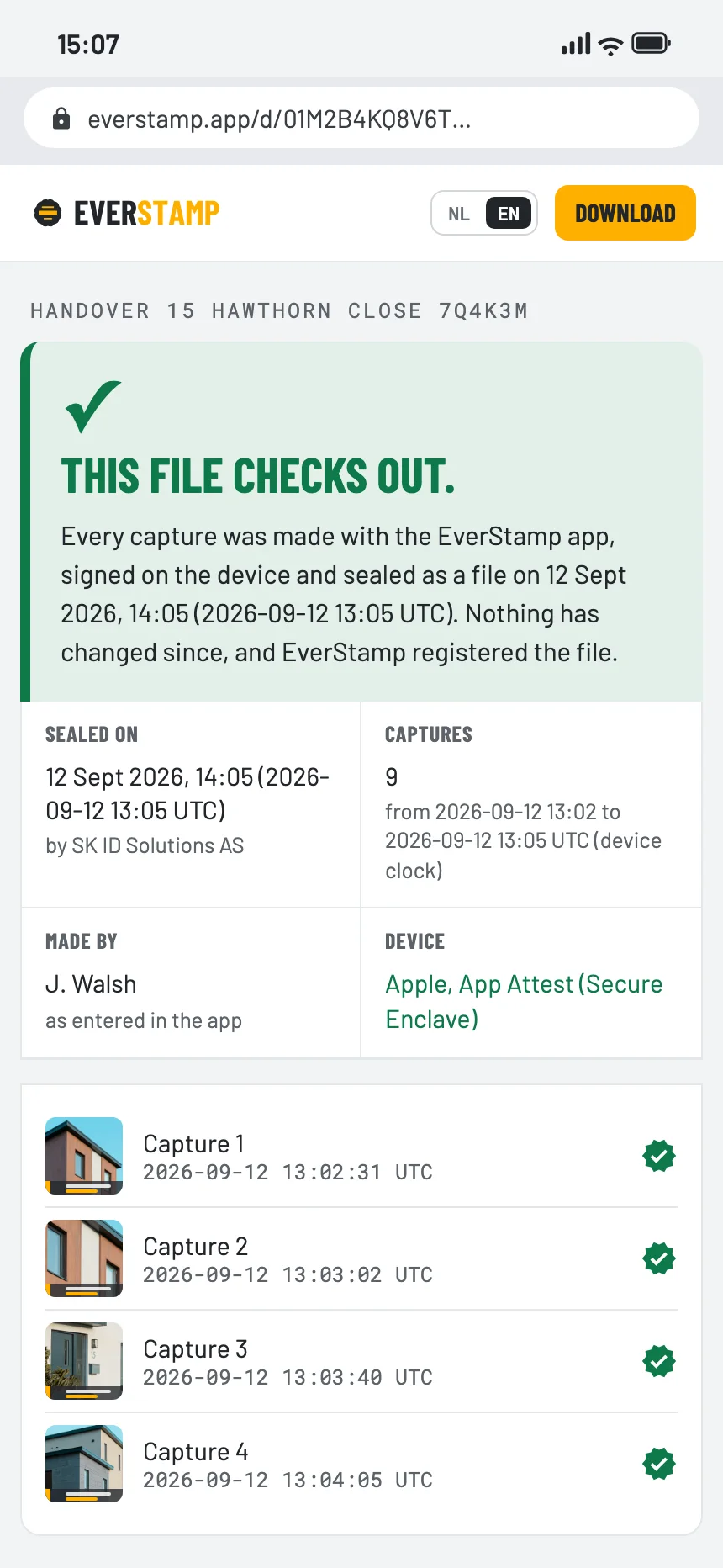
They open the file in the browser, with no account and nothing to install: every room in the order you photographed it, with the time from an independent service.

The file establishes
  • That these photos existed in this form at the time of the timestamp
  • That they were taken with this app, on this phone
  • That anything added, removed or changed since then shows up
It leaves to someone else
  • Whether a crack is new: that is for a surveyor to judge, with this file in front of them
  • What caused the damage
  • Who has to pay for it
The verification page in the browser: this file checks out
Questions

What people ask

Do I need a surveyor for a schedule of condition?

Not to take the photos. If surveyors are appointed under the Party Wall Act, your own dated file sits next to whatever they record.

When should I take the photos?

Before any work starts next door, and close to the start date. The shorter the gap, the less room for doubt about what happened in between.

Can my neighbour check the file?

Yes, in the browser, without an account or the app. So can their surveyor and their insurer.

What if damage appears later?

Make a new file of the same spots. The two files, each with its own timestamp, show before and after.

Before the first digger arrives

Basis is free: one file a month, with the same seal as Plus.

Get the app

Similar moments